
Hereafter
- Brightly (6:14)
- Stoppin' Arrow, Movin' Stone (7:19)
- Abel (7:14)
- Karma (7:27)
- Animals (7:42)
- Hearafter (10:03)
- Vanish (6:34)
- Blank (0:10)
- Kaeri No Jikan (6:27)
Now on Streaming
Lyrics
Brightly
Instrumental
Stoppin' Arrow, Movin' Stone
Instrumental
Abel
Instrumental
Karma
Instrumental
Animals
Instrumental
Hearafter
Instrumental
Vanish
Instrumental
Blank
Instrumental
Kaeri No Jikan
Instrumental
Intro
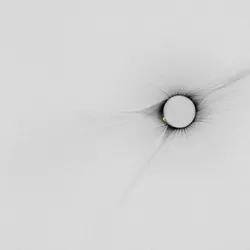
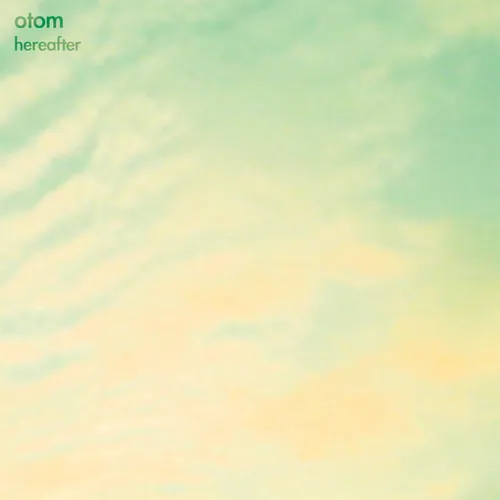
“Hereafter” is the 3rd full-length album by otom, an instrumental work released on May 15, 2006, built around guitar and field recording. Drifting between music and noise, it explores ambient and drone sounds in a quiet, experimental flow. Rather than melody, the focus is on space and pause, where gentle layers of sound slowly change the sense of time and distance. It stands as a work that fully captures otom’s experimental spirit.
Note
In “Hereafter”, not only the sounds themselves, but also the air and silence around them become part of the music. Instead of melodies that lead the listener, the way each sound is placed creates a scene, slowly moving the mind to another place. Many of the decorative elements found in earlier otom works are removed. Each phrase is kept simple and clear, with careful attention to how it rests in space. A laptop is used, but heavy editing is avoided, so the breath and small movements of live playing remain. Because of this, the sounds feel less “made” and more like something that simply exists there. The album does not rely on guitar alone. Everyday sounds—such as trumpet, water, and tuning forks—are used with care. These sounds are not meant to stand out, but to add depth to space and time, gently blurring the line between music and environment.
1. Brightly
“Brightly” begins with a haze of compressed field sounds, as a guitar repeats a minimal phrase in a quiet, steady flow. Inspired by Arvo Pärt’s “Spiegel im Spiegel”, a second guitar joins in, playing the same phrase with more force, slowly building a gentle rise in tension. Irregular tones from tuning forks, along with their reversed echoes, mark the subtle sway of time.
2. Stoppin’ Arrow, Movin’ Stone
“Stoppin’ Arrow, Movin’ Stone” opens with a child’s voice, heard as part of everyday life, and a distant line taken from a Marx Brothers film. Two repeating acoustic guitar chords then enter, and, as in “Brightly”, tuning forks and small household sounds mark an uneven rhythm. Over this steady pattern, electric guitar arpeggios are added one by one. With each layer, the track begins to breathe, slowly gaining a sense of life. A simple trumpet phrase then cuts through, giving clear change and depth to the repeating form.
3. Abel
“Abel” is inspired by the story of Cain and Abel from the Old Testament. Built around clean-toned Les Paul strumming, a single long note—stretched through volume swells—emerges as a simple melody. This line slowly spreads left and right, forming soft layers in space. Keeping the flowing motion of the strumming, the track rises gently, falls back, and then rises again. The tempo stays the same, but changes in volume and touch shape its expression. As the layers grow thicker, the sound gradually fills the space, moving toward a quiet saturation.
4. Karma
“Karma” is an instrumental track with a dramatic flow. It begins with quiet organ sounds, and gradually overdubbed guitar phrases rise clearly and brightly. It is one of otom’s favorite performances on this album. This track is also included on the 4th full-length album “Hidden Sun”, released in 2008.
5. Animals
“Animals” is a drone instrumental track built from guitar and feedback sounds. Soft and delicate tones with deep reverb create a sense of distance and space, and over time, organ sounds with a quiet, spiritual feel are added. This track also appears on otom’s 4th full-length album, “Hidden Sun”, released in 2006.
6. Hereafter
“Hereafter” is the album’s title track. It begins with a loop of a guitar phrase lightly treated with reverse, and as time passes, the length of the sample shifts almost imperceptibly. Long guitar tones then spread across the left and right channels, while a steady rhythm of glitch noise and a drone-like sound—like the stretched scrape of a low string—layer together, slowly filling the space. Keeping the loop’s rhythm, a new guitar phrase appears, followed by a bass melody, and for a brief moment the piece seems to move forward. Yet this motion soon settles, leaving only the repetition of the opening loop. Its form, where beginning and ending quietly overlap, mirrors the sense of time that runs through the album as a whole.
7. Vanish
“Vanish” is an ambient track built on a modulated guitar loop that slowly shifts in real time. A single-note phrase is gently layered on top, and the sound gradually grows deeper. Its shape begins to blur, and like drifting awareness, the tones change into a long, sustained flow. In time, bright acoustic guitar chords cut through, creating a brief moment of breath and light, yet the sound image continues to fade. At the end, a raw acoustic guitar phrase appears, as if pulling the listener back into real time—then it breaks off. Silence follows. The piece was born on a heavy summer afternoon, out of the still, unmoving air of that moment.
8. Blank
“Blank” is a ten-second silence placed between “Vanish” and the next track, “Kaeri No Jikan.” It serves as the album’s final space—a quiet pause that reflects this work’s deep care for the “in-between” of sound.
9. Kaeri No Jikan
“Kaeri No Jikan” begins, like the opening track “Brightly,” with a repeated piano phrase that recalls Arvo Pärt’s “Spiegel im Spiegel”. The sound of water moving inside a bottle, and the tone of bottles struck with a drumstick—each changing pitch with the amount of water—are used directly as rhythm, marking a simple and uncertain pulse. Over this, a nostalgic harmonica drone sounds like a distant time signal, drifting in from afar. As evening field recordings and noise slowly layer in, the air begins to grow dim and clouded. A chime phrase then appears above it all, leaving only “the time of the way home,” rising at the border between day and night. With this quiet scene, the album gently comes to an end.
Outro
“Hereafter” is a work that gives form to the feeling and the sense of time that rise in the “spaces” between sounds. Stripped-down phrases and environmental sounds quietly overlap, and the more you listen, the more the edges of your senses begin to soften. It is an album meant to be followed slowly, while resting in the empty space of sound. Enjoy.
“Hereafter” is available on Bandcamp, with high-quality versions available for purchase.