
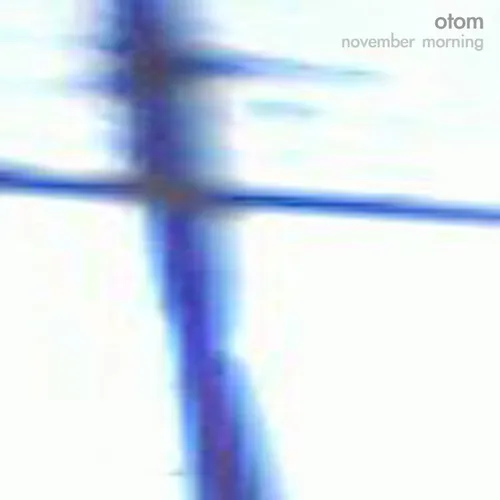
November Morning
- Sunday (3:34)
- Innocentage (4:23)
- Sound of the Snow (4:22)
- Thaw (5:07)
- Twenty-Four (3:54)
- Lees of Pain (7:59)
- More (3:25)
- Somewhere (4:01)
- Deep Clean (6:57)
- Halftone (4:38)
- Shadow (6:32)
Now on Streaming
Lyrics
Sunday
Instrumental
Innocentage
変化しない したいような
見当違い でもないような

目を覚ます 夢のような
届く声が妙にこだまする

まだ気のせいそんなような
届く声が妙にこだまする

— Japanese reworked version, written later
Sound of the Snow
あう云う言葉
あう云う仕草
もっとぐるぐる回れ
描いた形になるまで

降る言葉
降る仕草
もっとぐるぐる回れ
描いた形になるまで

生まれ行け

— Japanese reworked version, written later
Thaw
Instrumental
Twenty-Four
Fake,
Classify,
Egoism,
Love,
Under pressure,
Issue,
Distance,
Find number 24.
Lees of Pain
Instrumental
More
Instrumental
Somewhere
まだ終わり切れない
未だ確かに焦がれてる
流れるような言葉をくれよ
とうに醒めているならば

ただくすぶるだけの灯りに
感じてしまうんだろ
そこに戻れ 周りをみなよ
とうに醒めているならば

— Japanese reworked version, written later
Deep Clean
— Japanese reworked version, to be written later
Halftone
澄ました邂逅の果ての
今日のあなた
今のあなた

朝遊び疲れた
今日のあなた
昨日のあなた

消えてしまいそうに笑う
今日のあなた
明日のあなた

澄ました邂逅の果ての
今日のあなた
今のあなた

— Japanese reworked version, written later
Shadow
Instrumental
Intro
“November Morning” is the first album by otom, released on May 1, 2004. It collects songs mainly written between 2001 and 2004, and already shows the trial-and-error and experimental approaches that would later shape otom’s work. Rooted in shoegaze, dream pop, and electronica, the album moves freely across different sound textures. At times it recalls the thick noise and drifting feel of My Bloody Valentine or Flying Saucer Attack; at others, it reflects post-rock-influenced sound design and editing, as well as a sense of form and melody that recalls Michael Nyman or Simon & Garfunkel. With its balance of floating sound and clear musical direction, “November Morning” marks the starting point of otom as an artist and hints at the path that would follow.
Note
The songs on “November Morning” were written at different times, but are reworked here as a single piece with a clear sense of flow and circulation. Instrumental tracks and songs with vocals sit side by side, and many of them avoid clear verse-chorus form. Instead, repetition, small shifts, layering, and reverse sounds are used throughout, allowing the music to stay in a constant state of motion and change. The tracks are connected seamlessly, and a shared feeling—like changes in season, temperature, or time of day—runs through the entire album like a quiet undercurrent. The structure, moving from the opening track “Sunday” to the closing track “Shadow” and then back to the beginning, reflects a strong intention to shape the album as a single work rather than a collection of separate songs. “November Morning” also marks a major turning point for otom in both tools and mindset. During its production, the recording setup shifted from cassette MTRs and hard-disk recorders to a Mac-based system centered on MOTU’s Digital Performer. This album was the first otom completed in that new environment, and also the first made with a clear concept of form, sequence, and overall flow. In this sense, “November Morning” stands as the origin of otom’s approach to music, and the first album in which the ideas that connect to later works fully take shape.
1. Sunday
“Sunday” is the instrumental opening track of the album. The piece begins quietly, with long, processed bell tones, loops of reverse guitar, and drifting guitar chords forming a soft drone. Flute-like phrases and bell sounds are scattered across the stereo field, followed by layers of reversed piano phrases and their harmonies. A brief break led by a cello phrase appears midway through, after which voice loops are introduced and gradually layered, adding depth to the sound. Maintaining this atmosphere, the track flows seamlessly into the next piece. This collage-like approach, built from overlapping fragments of sound, is one of the defining traits of otom’s early work. The album’s closing track, “Shadow”, is structured to return to the opening of “Sunday”, creating a circular form that serves as one of the album’s key ideas.
2. Innocentage
“Innocentage” begins seamlessly from the previous track, “Sunday”. A rising feedback sound slowly comes to the front, and a main phrase built around acoustic guitar emerges quietly. As drums and bass enter, the sound suddenly shifts into a high-gain, heavier texture. The vocals, blending falsetto and natural voice, are placed with a restrained tone throughout. The track moves through clear contrasts in intensity, reaching its peak with a simple yet aggressive guitar solo and a drum pattern marked by sharp snare work. After this climax, the music returns to the calm opening sound built on acoustic guitar and feedback. Repeated, fading vocal lines lead the track to its end, flowing naturally into the next piece. This song also uses one of the key methods of early otom: building an entire track around a single, verse-like phrase. Within a limited chord progression, changes in dynamics and sound texture carry the structure of the piece. The title “Innocentage” is a coined word combining innocent and age, clearly reflecting the character of the track.
3. Sound of the Snow
“Sound of the Snow” begins from the fading feedback of the previous track. A softly rising acoustic guitar, including reversed sounds, is joined by a phrase built around a heartbeat-like kick and a bass line, and the piece slowly takes shape. Three-part vocals are added, but the song continues to develop with a reduced set of chords, avoiding clear verse-chorus divisions. As scattered vocal loops and breaks of reversed guitar pass by, layers of reversed sounds gradually pile up, filling the sound field. Like snow quietly accumulating, the music becomes dense and complete, then flows naturally into the next track. This song was written around the year 2000, on a quiet afternoon as snow steadily fell.
4. Thaw
“Thaw” is an instrumental track. It begins by following the flow of guitar and voice phrases from the previous track, “Sound of the Snow”, as electric piano tones with a rotary speaker effect are layered in, suggesting the first signs of growth. A repeating bass phrase, a new electric piano melody with a clear, open sound, and mellotron lines gradually join in, slowly filling the space. Before long, the distant, calling voice loop from “Sound of the Snow” reappears, and the track quietly begins to warm. Carrying on the sense of winter from the earlier track while moving toward an image of melting snow and early spring, this piece traces a gentle shift in season. The transition from “Sound of the Snow” to “Thaw” is one of otom’s favorite sequences.
5. Twenty-Four
“Twenty-Four” starts without pause from the previous track, “Thaw”, and clearly shifts the album’s tension. Built around a light drum pattern and repeating guitars with a shoegaze-like tone, the song unfolds in a rhythmic and forward-moving way. Multiple electric piano parts, treated with reverse effects and a floating feel, are layered throughout, while the vocal melody again relies on a single A-melody-like phrase, repeated to drive the song within a simple form. Toward the end, tremolo guitar and metallic, struck sounds are added, and the sound space gradually fills up. The song was originally written around 1998-1999. Its original version, titled “24”, featured a strong drum loop and sharp-edged guitar sounds. It is one of otom’s earliest songs and a work with deep personal meaning, pointing clearly to his musical origins. This album includes the current arrangement, which predates the original version. In 2020, a reconstructed version using the same structure was released as a single.
6. Lees of Pain
“Lees of Pain” is an instrumental track that opens with a cold piano arpeggio. A second piano gradually joins in, followed by reversed piano sounds and noise-laced piano textures that resemble a skipping CD, slowly thickening the overall sound image. As percussive piano and guitar accents and looping noise are introduced, the piece moves into a new phase. The arpeggios, repeated at a steady tempo, contain different note counts across layers, and the accumulation of these subtle differences causes the parts to gradually fall out of sync, creating a distinctive sense of misalignment and motion. At a moment when these offsets briefly converge on a single note, the scene shifts dramatically. Field-recorded rain sounds and a distant new piano motif emerge, while mellotron cello tones resonate with a sense of melancholy. Collage-like sounds are layered with uneven rhythms, spreading across the stereo field and depth. In the closing section, only the percussive piano accents, mellotron, and reversed piano remain, quietly linking the track to the next piece. This track freely showcases the experimental spirit of otom’s early work.
7. More
“More” is an instrumental track that opens with an organ, a floor-tom-driven drum pattern, and a repeating bass line. A spacious guitar main phrase is layered on top, while feedback noise from a Roland tape echo is performed in real time, gradually giving the sound a wavering, undulating quality. As heavily distorted lead synthesizers intertwine, the track briefly enters a phase charged with a sense of violence. After moving through shifts in intensity, guitars and synthesizers once again pile up to fill the sound field, and the piece flows seamlessly into the next track. Written around 1997-1998, “More” is one of the earliest works in otom’s catalog. Even at this early stage, the approach of building a track from a limited number of chords and developing it through repetition and changes in texture is already clearly articulated, revealing a prototype of the methodology that would continue throughout later works.
8. Somewhere
“Somewhere” is built on a beat sampled from a powerful drum phrase by John Bonham of Led Zeppelin. Shoegaze-textured guitars, a bass line, vocals, and multiple layers of chorus are stacked on top, gradually thickening the sound into a dense, wall-of-sound-like texture. Here again, the track is completed using only an A-section-like phrase, with repetition and careful control of volume sustaining its forward momentum. The core motif of this piece dates back many years. Around 1999, it had already taken shape as a three-part composition titled “Emotion”, combining glitch-like noise, wall-of-sound-oriented drones, and a song-based structure. This work remained unreleased for a long time, and for this album only the vocal section was extracted and presented as “Somewhere”. Later, the three-part version of “Emotion”, slightly refined, was released as the closing track on one of otom’s favorite EPs, “New Life” (2020). In this sense, “Somewhere” can be seen as a fragment of ideas spanning multiple periods of otom’s career.
9. Deep Clean
“Deep Clean” begins quietly with a guitar phrase played through a Les Paul humbucker, combining a thick yet clear clean tone with echo and reverb. Subtle feedback, a low-register line hovering between bass and guitar, and loops of reversed harmonics gently establish the rhythm. Distant, call-like vocals are layered in, and the sound slowly takes shape. The track is driven by repetition and shifts in playing intensity, centered on guitar touch rather than harmonic change. As church organ tones and vocal harmonies are added, performance and resonance merge, gradually filling the sound field. The music builds with a sense of immersion, expanding outward and carrying a quietly ecstatic lift. An instrumental version of the track, reconstructed with all sounds rendered dry, appears on the 1st EP “Highlife”, released shortly after the debut album. Together, the two versions present contrasting perspectives on the same composition.
10. Halftone
“Halftone” carries over the sense of uplift from the previous track, “Deep Clean”, opening with reversed guitar sounds and a heavy kick drum pattern. Built around a repeating block of chords and a three-part vocal line, the track gradually layers an acoustic guitar phrase that ticks steadily, almost like a clock marking time. In the middle section, a Mellotron phrase is introduced, creating a brief break before the sound slowly saturates toward the ending. The result is an introspective, highly floating piece that evokes the sensation of drifting through space while listening to one’s own heartbeat. Like “More”, this track was written at an early stage, around 1998-1999, and remains exclusive to this album. In terms of both structure and concept, it is one of the most personally significant works in otom’s catalogue. In band performances, a bouncing, jazz-influenced drum arrangement is often favored for this piece.
11. Shadow
“Shadow” is the instrumental track that closes the album. Picking up the lingering mood of the previous track, “Halftone”, it begins quietly with an echo-laden piano phrase. As deep, ambient reverb fills the sound field, organ, electric piano, and fragmentary piano motifs appear and disappear, drifting across the space around a kick pattern that suggests the sound of a heartbeat. A bass line is gradually introduced, followed by a reversed guitar loop that connects back to the opening of the album. As all the instruments come into motion and the gaps between sounds are slowly filled, the piece reaches its end with a single, long bell tone. That resonance points back toward the beginning of the album, revealing its circular structure.
Outro
“November Morning” is a work woven as a single flow, built from sound fluctuations and circulation themselves. It is also a foundational release in which otom’s approach to making music first took clear shape, leading to the current style that places strong emphasis on the relationships between tracks and the overall flow of an album. Enjoy.
“November Morning” is available on Bandcamp, with high-quality versions available for purchase.